
Overview of Lithium Applications, Toxicology and Separation Methods

Lithium is a key resource for electric mobility, energy storage and industrial applications. This review analyses supply chain challenges, separation methods, environmental impacts of extraction and advances in battery recycling and industrial waste recovery.
Concentrated Solar Power (CSP): Technological Innovations, Hybrid Systems and Environmental and Social Impacts
Concentrated Solar Power (CSP) technologies are key for decarbonising high-temperature industrial processes and generating dispatchable renewable electricity. Advances include thermal storage, nanofluids, nano-encapsulated PCMs and hybrid systems with photovoltaics, geothermal, biomass and hydrogen. Studies show low emissions and positive effects on rural and Indigenous communities. Challenges include water use, land impact, material toxicity and cultural sensitivity.
Social Tensions of Decarbonisation in the Ibero-American Region
El presente informe constituye la contribución del Consejo Superior de Investigaciones Científicas (CSIC) al proyecto EULAC-Energytran, coordinado por la Organización de Estados Iberoamericanos (OEI). Su objetivo es analizar las tensiones sociales que se están produciendo en los procesos de descarbonización en Iberoamérica, a partir de un enfoque comparado entre distintos países y contextos sociales. La transición energética se presenta como una condición necesaria para afrontar la crisis climática. Sin embargo, su implementación y sus posibilidades de éxito se enfrentan a una serie de retos sociopolíticos que trascienden los aspectos tecnológicos. Este informe parte de la premisa de que solo una transición rápida y lo más justa posible podrá ser socialmente sostenible y alcanzar los objetivos de descarbonización establecidos en el Acuerdo de París.
Climate Change and Biodiversity Research Platform for the Energy Transition
The digital platform Energytran Network4Collaboration was created to foster cooperation and knowledge exchange between Europe and Latin America and the Caribbean in the field of energy transition.
The dataset includes registered users, access frequency, published news, collaboration opportunities, events and geographical distribution. Collected in December 2025, data exclude personal or sensitive information.
The platform offers multilingual navigation, user profiles, networks, events and resources that facilitate interdisciplinary collaboration.
Software for SDG Monitoring in Research

Monitoring the Sustainable Development Goals (SDGs) is essential to assess progress toward a more sustainable and equitable future. SDGs 7, 12 and 13—affordable clean energy, responsible consumption and production, and climate action—are central to the energy transition.
To measure this, the Energytran project developed an analytical tool that evaluates progress in the EU and LAC through two composite indicators: the Renewable Energy Adoption Index and the Energy Transition Sustainability Index. Both are implemented as automated workflows in the LifeWatch ERIC virtual research environment, ensuring transparent, reproducible and FAIR analysis.
Online Course: “Environmental Challenges and Open Science – An Approach from Innovation and Technology”
This course aims to train participants in the principles and practices of Open Science, showing how it can contribute to addressing urgent global challenges such as climate change and environmental degradation. It covers tools, platforms and repositories offering open access to data, publications and methodologies, enhancing transparency and accelerating scientific discovery. It also explores methods to integrate diverse perspectives and knowledge, including those of local communities and citizen scientists.
Report II: Scientific Cooperation in Europe, Latin America and the Caribbean for the Energy Transition
This report analyses the energy transition from two complementary perspectives: social and environmental. It examines its social impact—territorial justice, public policies for a just transition and the importance of open science—and addresses environmental challenges, metrics, solutions and policies for a sustainable transition. The document is based on reflections from two ENERGYTRAN Virtual Thematic Events held in 2024 and 2025.
Policy Brief II
This document summarizes key debates, conclusions and recommendations from the report “Scientific Cooperation between Europe and Latin America and the Caribbean: towards a just and environmentally sustainable energy transition.” Both reports are based on the Virtual Thematic Event “The social impact of the energy transition” (17–18 October 2024) and the Virtual Thematic Event “Towards environmental sustainability in the energy transition” (8–9 October 2025) within the ENERGYTRAN project.
The events brought together experts from Latin America, the Caribbean and the EU—including researchers, policymakers, civil society and the private sector—to exchange knowledge and good practices on environmental, sociocultural and political dimensions of the energy transition. Discussions emphasised the need for a just, inclusive and environmentally sustainable transition, including citizen participation, the role of public institutions and adequate regulatory frameworks.
Women and the Energy Transition: Analysis and Policy Recommendations in the Framework of the EULAC Energytran Project

The objective of this document is to incorporate the gender-focused policy recommendations of the Energytran project, particularly those that help break traditional male-dominated structures in energy systems and promote greater gender equality and opportunities between men and women.
Report on Scientific Cooperation in Europe, Latin America and the Caribbean for the Energy Transition
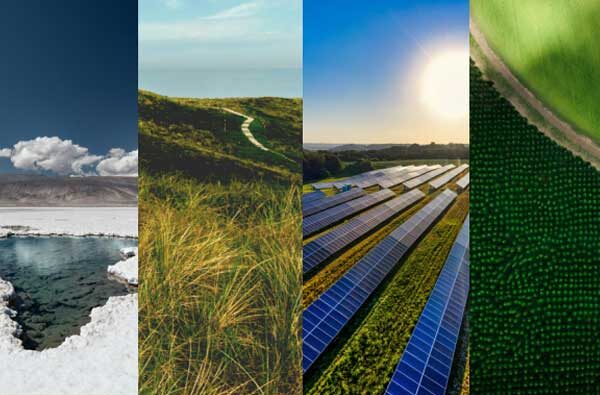
This report addresses the previously mentioned technological, social and sustainability dimensions, positioning the energy transition as a priority action given its relevance for the future. It also examines the role of scientific cooperation and diplomacy between Europe, Latin America and the Caribbean, highlighting how they act as strategic collaboration frameworks for the energy transition across countries and regions.