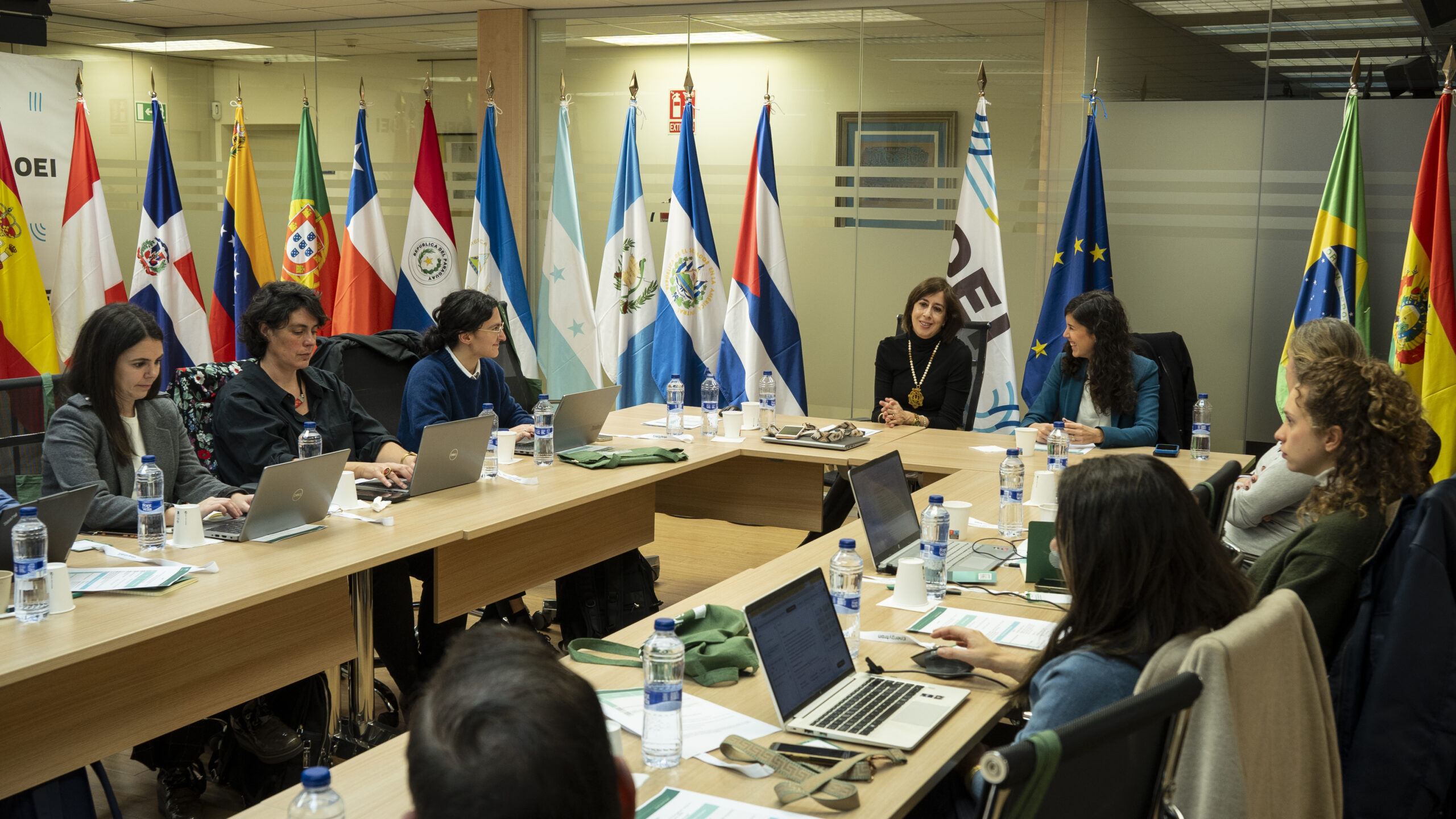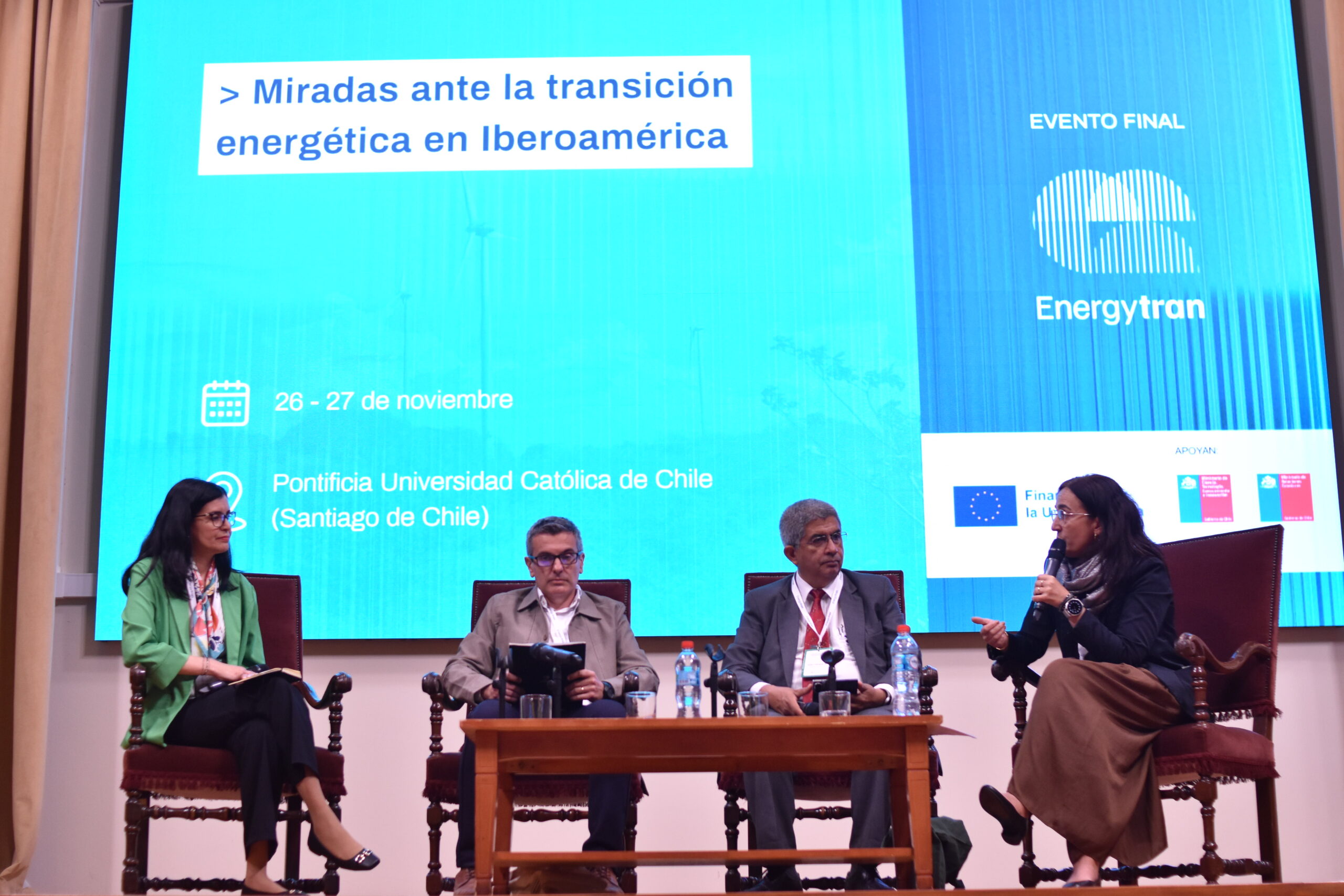

Since the project began in January 2024, more than 300 people (mainly researchers and technical staff from public institutions) have participated in Energytran activities, including virtual thematic events, international and national workshops, and mobility schemes. In this regard, researcher mobility has been one of the most significant actions in promoting knowledge exchange and strengthening scientific cooperation networks between Latin America and the Caribbean (LAC) and Europe.
Six months ago, we presented the project within the Energytran cluster, in the 4th edition of our newsletter, as a good practice for addressing the challenge of the energy transition. We outlined the strategic approaches implemented by the project, which focus not only on technological development but also on the social and environmental impacts of the energy transition, as well as on transferring the knowledge generated through scientific cooperation to public policymakers.
Working in this way is not easy, but the Energytran consortium believes that it is the only way to achieve a truly green, fair and equitable energy transition.
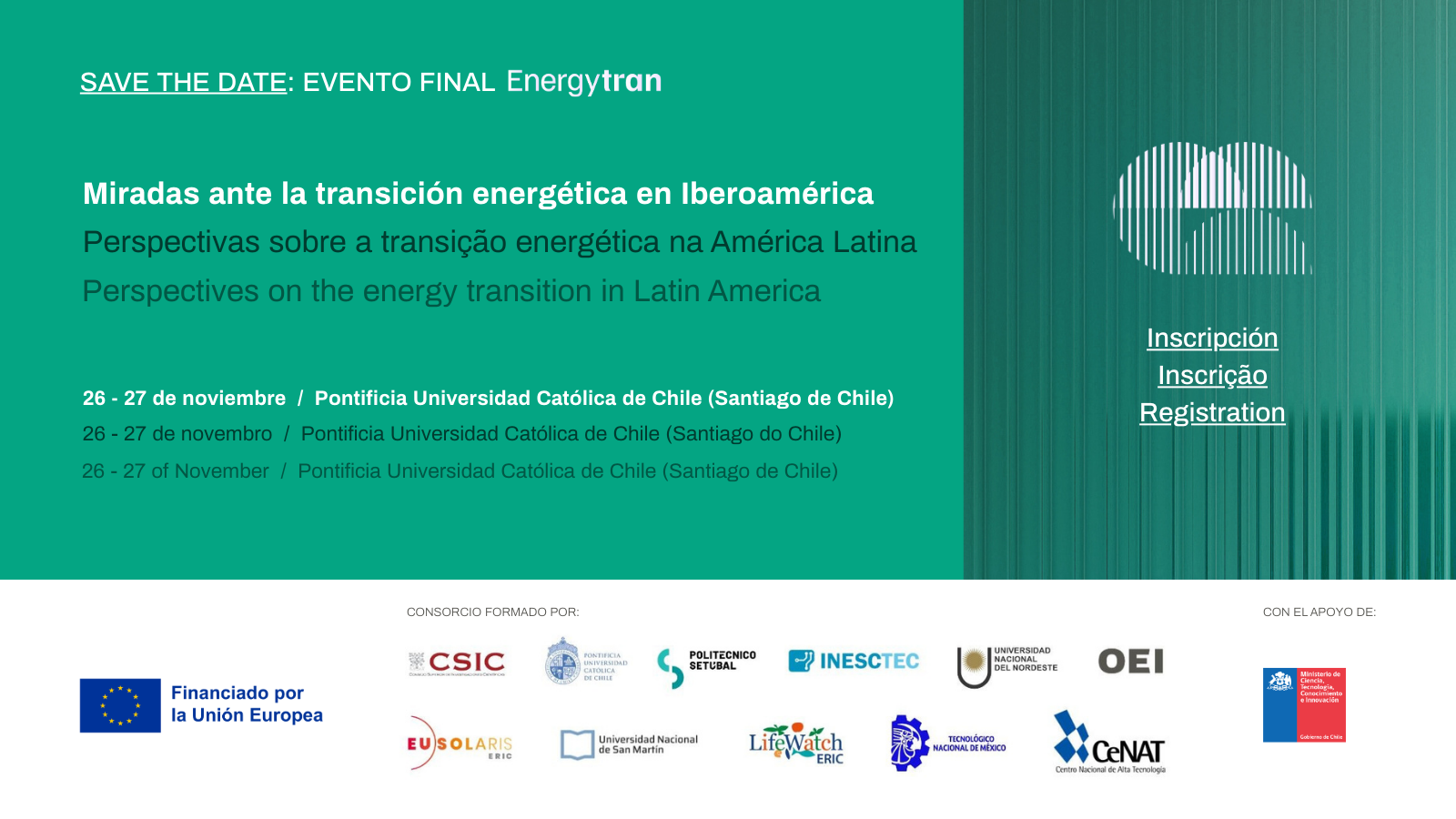
Furthermore, that article introduced the Energytran Consortium as a complex, multisectoral team, which we consider essential to addressing the multidisciplinary challenge of decarbonisation. The consortium initially comprised 11 partners (currently, there are 12, following the inclusion of UMAG from Chile as an associated partner).
Specifically, the consortium brings together two European Research Infrastructure Consortia (ERICs), one specialising in energy and the other in the environment. These include 18 institutions from Spain, France, Germany, Cyprus, Portugal and Greece (in the case of EU-SOLARIS ERIC), and eight institutions from Belgium, Bulgaria, Greece, Italy, the Netherlands, Portugal, Slovenia and Spain (in the case of LifeWatch ERIC).
It also includes eight public research centres and universities (three in Europe – IPS, INESCTEC in Portugal and CSIC in Spain – and five in Latin America and the Caribbean – TECNM in Mexico, UNNE and UNSAM in Argentina, PUC in Chile and CENAT in Costa Rica).
Finally, the consortium includes the international organisation OEI (Organization of Ibero-American States for Education, Science and Culture), which brings together 23 governments (20 from Latin America, as well as Portugal, Spain and Andorra).
Altogether, 58 entities work together, directly or indirectly, across 32 countries (20 in LAC and 12 in Europe).
For further information, please consult: Newsletter 6 | E³UDRES² Ent-r-e-novators Connecting Visions: From Shared Strategies to Regional Transformation