D1.1 Inventory of RI for energy transition
D1.3 Monitoring report for technology mobilities II
D2.1 Paper about solar thermal energy assessment
D2.2 Monography about RI for green hydrogen and lithium
D2.3 Report about lithium extraction
D2.4 Conclusions on the on-line international workshop
D2.5 Conclusions on the virtual thematic event
D3.1 Project webpage
D3.2 Ethic plan
D3.3 Data management plan
D3.4 Gender equality plan
D3.5 Plan for dissemination and exploitation
D3.6 Policy brief I: the role of Technology in Energy transition with a focus on Lithium, Green Hydrogen and Solar Energy in Latin America and Europe from Gender perspective
D3.7 Memorandums of understanding
D3.8 Updated plan for dissemination and exploitation
D3.9 Policy brief II
D3.10 Project management handbook
D3.11 Quality assurance plan
D4.1 E-learning course on open science
D5.1 Software for the SDG achievement on research
D5.2 Development of the research platform of climate change and diversity for energy transition
D5.3 Monitoring report for sustainability mobilities II
D6.2 Monitoring report for social impact mobilities II
D7.1 Ethnographic research about the social impacts of energy transition
D 1.2 Monitoring report for technology mobilities I
D 4.2 Monitoring report for sustainability mobilities I
D 6.1 Monitoring report for social impact mobilities I
The energy transition is currently a priority area ofaction due to the consequences it represents for the future. This transition involves the replacement of traditional energy systems based on fossil fuels with cleaner, sustainable energy models. The main purpose of this diagnosis is to offer a detailed perspective on how the energy transition is being carried out in the countries involved in the ENERGYTRAN project (Argentina, Chile, Costa Rica, Spain, Mexico and Portugal). It is important to highlight that the Ibero-American region refers to the countries of Latin America and the Iberian Peninsula that speak Spanish and Portuguese.
The ENERGYTRAN project is mainly focused on the generation of innovative technological solutions for the clean and social energy transition. Its products are heterogeneous (scientific publications, an e-learning course, platforms, software and policy recommendations) and address the energy transition with a fair and environmental perspective in LAC and EU countries, with the aim of generating knowledge to improve . The abilities. of the main actors in the energy transition: researchers, policy makers, companies and civil society.
The social impact of the Energy Transition in Iberoamérica
These Policy Recommendations are part of the Energytran Project: Cooperation among Research Infrastructures for the Energy Transition between European countries and Latin America and the Caribbean.
This report has been prepared as a systematization process following the implementation of—and taking into account the content, conclusions and recommendations of—the Thematic Virtual Event “Strengthening Europe–Latin America Cooperation in the Energy Transition: Exploring Technologies, Policies and Innovative Practices”, carried out within the framework of the ENERGYTRAN project.
The thematic sections correspond to the panels established during the event. Specifically, the section “Scientific cooperation and diplomacy” corresponds to Panel 1, “Knowledge exchange in scientific cooperation between Europe and Latin America and the Caribbean”; the section “Emerging technologies: challenges and opportunities in the energy sector” brings together contributions from Panel 2, “Challenges and opportunities in the energy sector”, as well as Panel 4, “Emerging technologies for energy sustainability”; and the section “Experiences for the energy transition with an environmental and social perspective” includes contributions from Panel 3, “Environmental and social impact of the energy transition”, and Panel 5, “Applications of solar thermal energy”.
Each section concludes with the findings of the ENERGYTRAN project partner entities that moderated the panels. Likewise, this report forms part, as an explanatory annex, of the “Policy Recommendations for the Energy Transition: Technology and Gender.”
This document is developed within the framework of the EULAC ENERGYTRAN project, focused on scientific cooperation to address the energy transition in Latin America and the Caribbean (LAC) and the European Union (EU). One of the project’s objectives is to support the development of public policies and regulatory frameworks that promote a clean, sustainable and just energy transition in order to move towards a resilient society.
The project also pursues other objectives: promoting the exchange and generation of knowledge from a multidisciplinary approach (technological, environmental and social); transferring the results of technological development to provide solutions that foster progressive electrification integrating decarbonized and low-emission energy sources, such as green hydrogen, lithium and solar thermal energy. Among the project’s specific outcomes is the promotion of scientific cooperation networks between R&D&I entities in Latin America and European research infrastructures, as well as dialogue and exchange with local contexts (indigenous and rural communities), with the aim of building capacities for the use of clean energy to meet social needs.
This document is intended to complement the policy recommendations to be developed within the project on the theme of the energy transition. Its objective is to incorporate recommendations focused on a gender perspective, particularly those that help to break traditional male-dominated structures in energy systems and enable a situation with smaller gender gaps and greater equality of opportunities between men and women.
To this end, the introduction presents the international context on gender and the energy transition. The first section reviews the academic literature and official documentation on the role of women in different aspects of the energy transition. The second section presents a summary of the diagnostic assessment of the energy transition from a gender perspective within the framework of the project, identifying existing gaps associated with the Sustainable Development Goals (specifically SDG 5 – Gender Equality – and SDG 7 – Affordable and Clean Energy). The third section includes various international initiatives that promote the inclusion of women in the energy sector, as well as examples of gender-responsive energy policies. Finally, a set of gender-sensitive recommendations is presented in order to contribute to informed political decision-making
This report has been published as a contribution to national governments of Ibero-American and European countries, as well as to the international cooperation system and civil society at large, on the social impact and environmental sustainability of the energy transition. It has been produced within the framework of the European Energytran project on cooperation among research infrastructures for the energy transition between European countries and Latin America and the Caribbean, led by the OEI and comprising a consortium of 11 partners.
As part of the project, an initial publication titled “Policy Recommendations on Technology and Gender for the Energy Transition” was produced, addressing the role of technology in the energy transition with particular attention to lithium, green hydrogen and solar energy in Latin America and Europe from a gender perspective. This publication consisted of three documents: an introductory summary document with the main policy recommendations; a report addressing scientific cooperation focused on exploring technologies, policies and innovative practices for the energy transition; and a third article on women and the energy transition.
As a continuation of that publication, the Policy Recommendations on the Social and Environmental Impact of the Energy Transition are now presented. This set consists of two documents: a first summary document with the main policy recommendations for incorporating environmental and social perspectives into the energy transition; and a second document, the report presented here: Scientific Cooperation in Europe, Latin America and the Caribbean for the Energy Transition: Towards an Environmentally Sustainable and Just Energy Transition.
This document summarizes the debates, conclusions, and key recommendations that have emerged from the report “Scientific Cooperation between Europe and Latin America and the Caribbean: Towards a Just and Environmentally Sustainable Energy Transition.” It is based on the Virtual Thematic Event “Social Impact of the Energy Transition,” held on October 17–18, 2024, and the Virtual Thematic Event “Towards Environmental Sustainability in the Energy Transition,” held on October 8–9, 2025, within the framework of the ENERGYTRAN project.
Both events brought together experts (researchers, policymakers, civil society, and private sector representatives) from Latin America, the Caribbean, and the European Union to promote the exchange of knowledge, experiences, and best practices in the environmental, sociocultural, and political dimensions of the energy transition, emphasizing the need for a fair and sustainable model. The discussions highlighted the importance of ensuring a just, inclusive, and environmentally sustainable transition, taking into account citizen participation, the role of public institutions, and the need for appropriate regulatory frameworks.
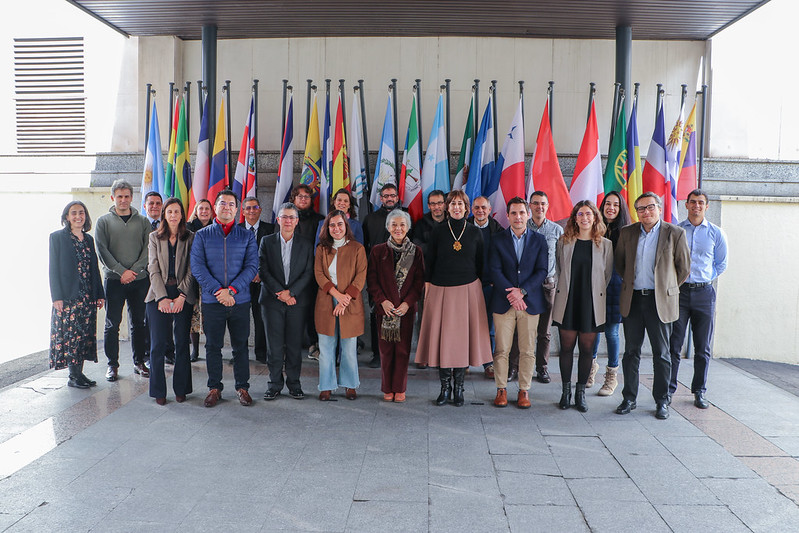
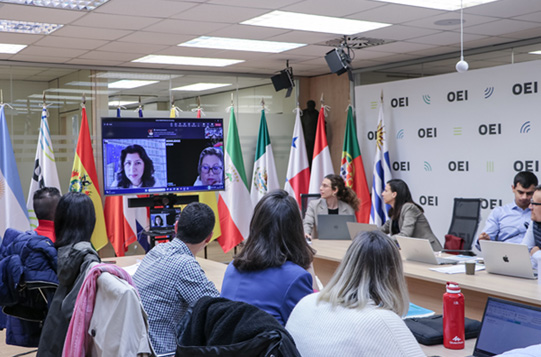
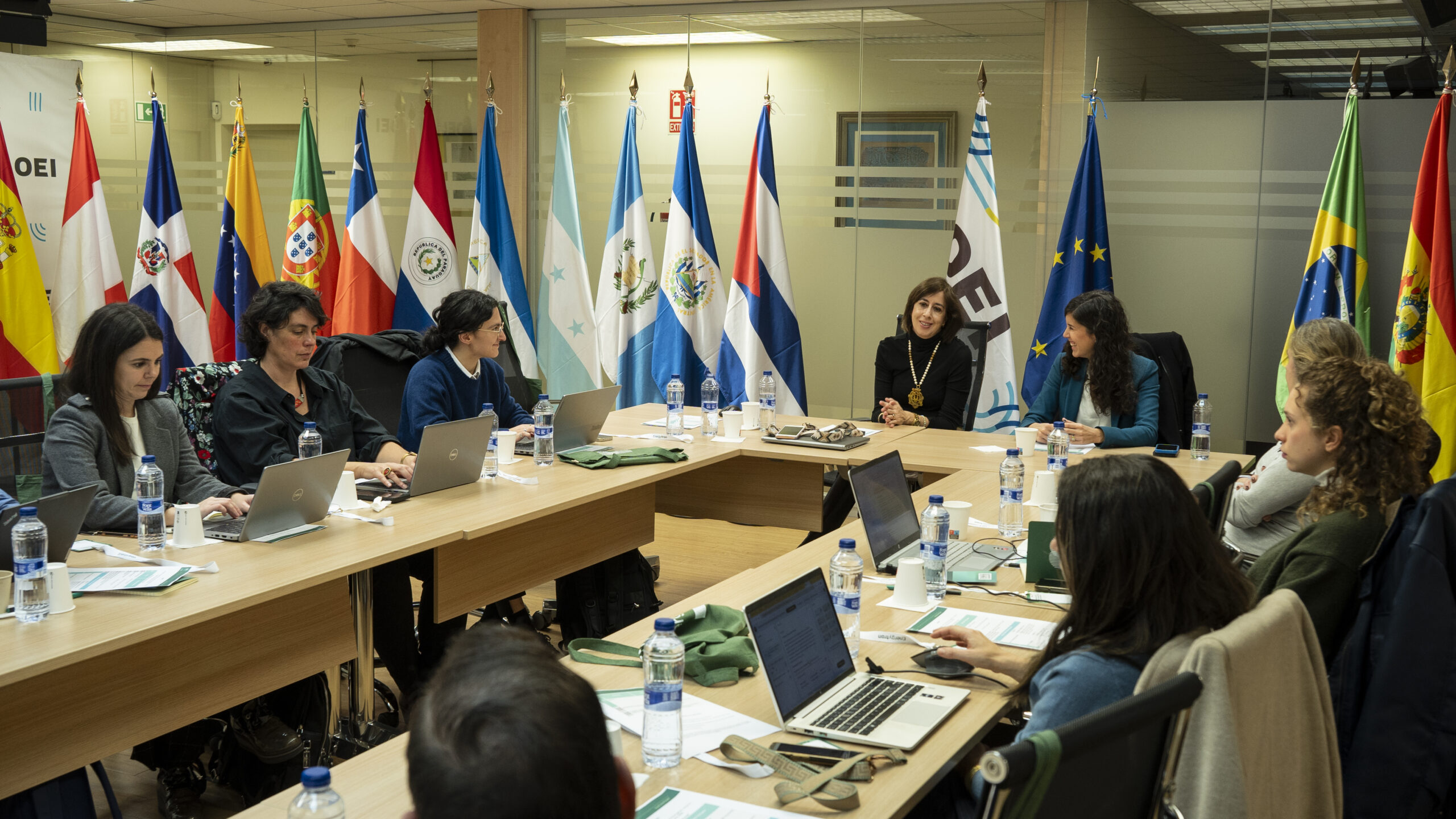
The Energytran project, led by the Organization of Ibero-American States (OEI), was officially launched in January 2024 with the aim of promoting a clean, just, and sustainable energy transition between Europe and Latin America, by connecting research infrastructures and capacities across both regions. This launch was reinforced by an in-person kick-off meeting held in March 2024 at the OEI headquarters in Madrid, bringing together the 11 consortium institutions and marking the effective start of scientific cooperation activities.
The OEI project aimed at promoting a clean, just, and sustainable energy transition between Europe and Latin America. This video highlights key moments from the kick-off meeting, which marked the start of cooperation among the consortium institutions.
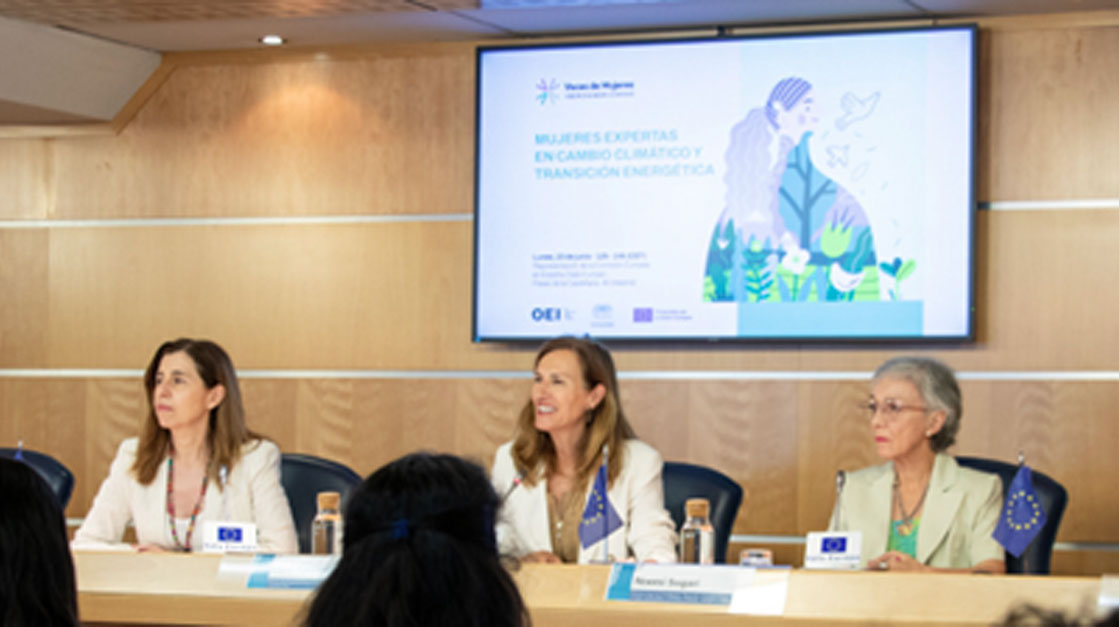
The Organization of Ibero-American States (OEI), within the framework of COP30 held in November in Brazil, organized this roundtable in collaboration with the Representation of the European Commission in Spain. The meeting addressed climate change and the energy transition as key priorities on the political agenda, highlighting the need to integrate a gender perspective and to strengthen the role of women professionals, particularly in Ibero-America. With the support of the Energytran project and the “Voices of Ibero-American Women” Platform, the event promoted the active contribution of women to global discussions on climate action and sustainability.
The European project Energytran, led by the Organization of Ibero-American States (OEI), has already reached 18 months of implementation and is now entering its final phase, scheduled to conclude on December 31 of this year. Throughout this year and a half of execution, the project — carried out together with 10 other partner research institutions from Europe, Latin America, and the Caribbean — has reached more than 700 people and involved over 60 institutions.
The European project Energytran, led by the Organization of Ibero-American States (OEI), has already completed 18 months of implementation and is now entering its final phase, scheduled to conclude on 31 December of this year. Over this year and a half of implementation, the project—carried out together with 10 other partner research institutions from Europe and Latin America and the Caribbean—has reached more than 700 people and involved over 60 institutions.
The European project Energytran (EULAC for energy transition) officially concluded in Chile with a major event held in Santiago on 26 and 27 November 2025, bringing together experts, universities, and organizations to discuss the energy transition in Ibero-America, highlighting the impetus provided by the OEI to collaboration in this sector.
The Organization of Ibero-American States for Education, Science and Culture (OEI), in its capacity as the coordinating institution of the Energytran project and a key actor in Ibero-American scientific cooperation, held the national meeting entitled “Scientific cooperation for a just and sustainable energy transition: towards the 2026 Ibero-American Summit” on December 10, 2025, in Madrid. The main objective of the event was to share the results of the Energytran project, with the aim that they may be submitted by the OEI to the 30th Ibero-American Summit in 2026. Click on the news item to watch the video: https://www.instagram.com/p/DScpbdRgQLb/
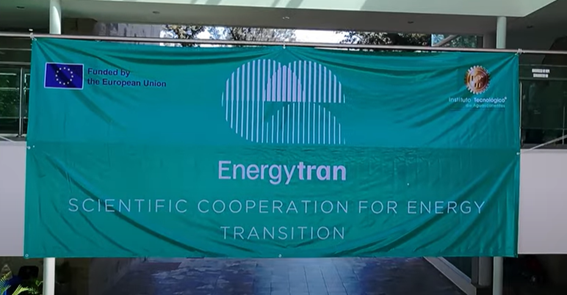
From March 24 to 27, 2025, Aguascalientes hosted the International Energytran Workshop, bringing together experts from Europe and Latin America to discuss the challenges of the energy transition. The program included the #EnergytranPoster Conference, technical courses, plenary lectures, and roundtables, focusing on decarbonizing the energy system, social justice, inclusion, international cooperation, and the cultural and economic impacts of the transition. The discussions highlighted that, although the technologies already exist, the main challenge is achieving social and political consensus to accelerate change.
From March 24 to 27, 2025, Aguascalientes hosted the International Energytran Workshop, bringing together experts from Europe and Latin America to discuss the challenges of the energy transition. The program included the #EnergytranPoster Conference, technical courses, plenary lectures, and roundtables, focusing on decarbonizing the energy system, social justice, inclusion, international cooperation, and the cultural and economic impacts of the transition. The discussions highlighted that, although the technologies already exist, the main challenge is achieving social and political consensus to accelerate change.
From March 24 to 27, 2025, Aguascalientes hosted the International Energytran Workshop, bringing together experts from Europe and Latin America to discuss the challenges of the energy transition. The program included the #EnergytranPoster Conference, technical courses, plenary lectures, and roundtables, focusing on decarbonizing the energy system, social justice, inclusion, international cooperation, and the cultural and economic impacts of the transition. The discussions highlighted that, although the technologies already exist, the main challenge is achieving social and political consensus to accelerate change.
From March 24 to 27, 2025, Aguascalientes hosted the International Energytran Workshop, bringing together experts from Europe and Latin America to discuss the challenges of the energy transition. The program included the #EnergytranPoster Conference, technical courses, plenary lectures, and roundtables, focusing on decarbonizing the energy system, social justice, inclusion, international cooperation, and the cultural and economic impacts of the transition. The discussions highlighted that, although the technologies already exist, the main challenge is achieving social and political consensus to accelerate change.
As part of the European project Energytran, led by the Organization of States, the third virtual event titled “Towards an Environmentally Sustainable Energy Transition” was held on October 9.
As part of the European project Energytran, led by the Organization of States, the third virtual event titled “Towards an Environmentally Sustainable Energy Transition” was held on October 8.
On April 29, 2025, the in-person seminar of the Energytran project was held at the Lectura Mundi Auditorium, located on the Miguelete Campus of UNSAM (Av. 25 de Mayo and Francia, San Martín). The Energytran project, funded under international cooperation initiatives, aims to promote citizen participation in the energy transition and strengthen ties between Europe and Latin America in this field. In this context, the Center for Transformation Research (CENIT–EEyN–UNSAM), together with the Organization of Ibero-American States (OEI), organized the seminar to exchange experiences, discuss joint strategies, and foster international cooperation in sustainable energy.

Research infrastructure cooperation for energy transition between European and Latin American and the Caribbean countries

Funded by the European Union. Views and opinions expressed are however those of the author(s) only and do not necessarily reflect those of the European Union. Neither the European Union nor the granting authority can be held responsible for them.
EULAC ENERGYTRAN © 2026 · All rigths reserved
EULAC ENERGYTRAN © 2026
All rigths reserved

Research infrastructure cooperation for energy
transition between European and Latin American
and the Caribbean countries
EULAC ENERGYTRAN © 2026
All rights reserved
To provide the best experiences, we use technologies like cookies to store and/or access device information.